top of page


Share Frame's UX design
Share your frames with loved ones from far away
UX Design
Figma
Timeline:
Jan- February 2024
Role:
UX Designer
Problem
People all around the world want to share their favorite memories with loved ones within a shape of a frame.....
But
It's difficult to do so when you're restricted to mailing your favorite memories, causing a wait.
As we know they're multiple ways to capture and share those memories abroad but I got a little curious to know If It's easier or harder for people to traditionally mail their picture frames and what solutions I might come up with to help make It as close to the real experience as possible .


Solution - Let's Try Something New
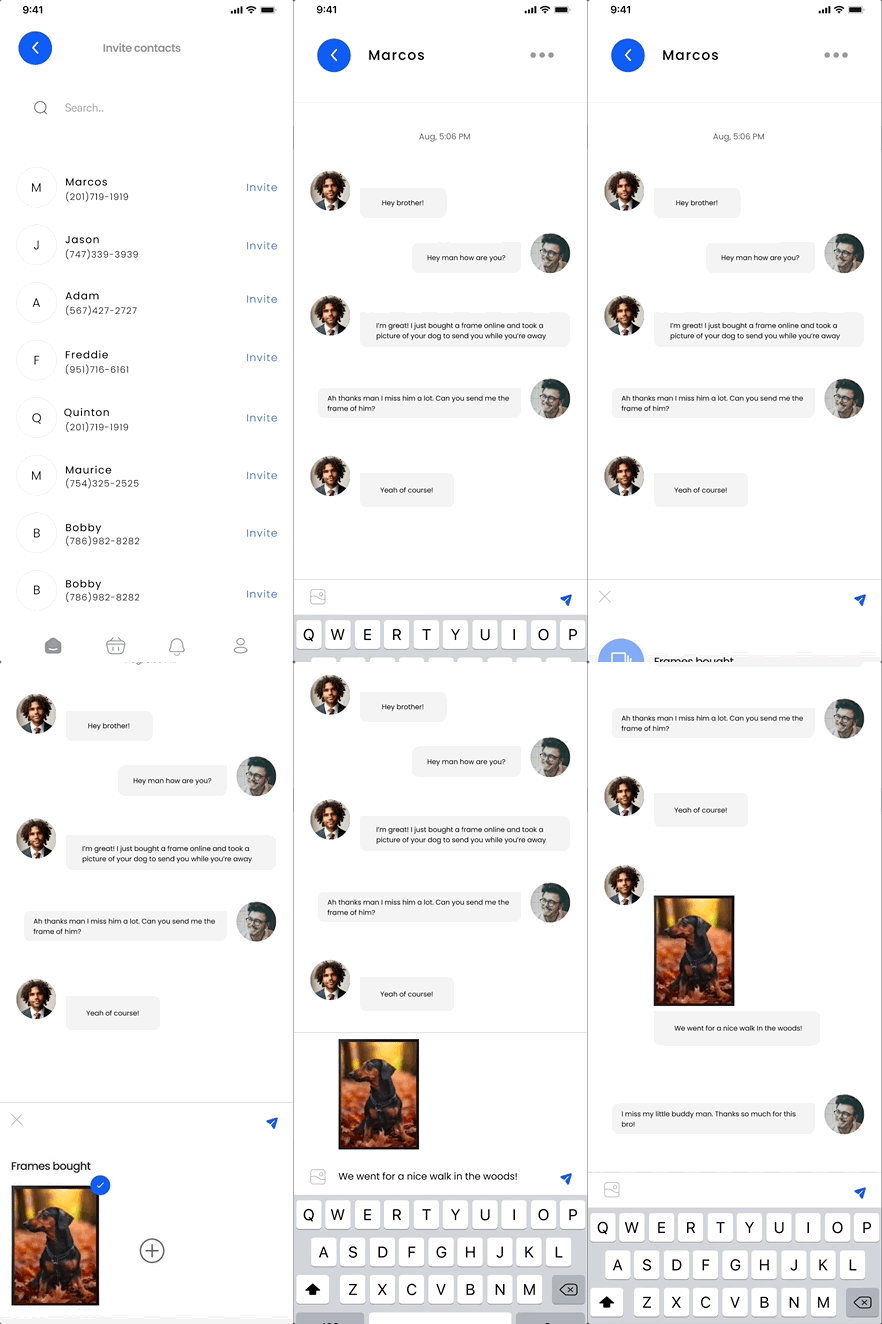
Share Frames Is a concept that allows users to virtually share their picture frames with loved ones.
This concept directs the attention away from traditional frame sharing, with a virtual one. This helps users easily share their frames compared to the hassle of mailing.
My Reason For This Concept
Whether Big Or Small Every Little Bit Helps!
Because I'm self taught, I'm naturally In a position to think of concepts that could help in real world scenarios, even If It has a small Impact, every little bit helps. I was Inside of Target looking through the bedding section, and I saw an aisle filled with picture frames. I thought about how difficult or time consuming things can be when you have to mail your memories. In the age of tech and the growth It continues to have, I believe this concept adds to It's growth. I went on to later test this theory
My Goals
1. Involve my concept to a select group of people.
2. Test the authenticity of virtually sharing frames vs mailing.
3. Create an Impact.

Goals Explained
Having these goals In mind guide me In figuring out how a user might think of the coming subject, and how they feel about the overall Idea.

Research - Questions To Consider
(Part 1)
1. What are your thoughts on the progression of sharing memorabilia virtually?
2. Do you find the process of mailing your memorabilia vs sharing online easier, or difficult? Explain.
Research
(Part 2)
The Voice Of My Audience
I have the goals I set myself up for leading Into the progression of this research, and the questions to consider when approaching my audience. By this time I wanted to ask the above questions to my audience to get an authentic view on the progression of mailing memorabilia vs sharing virtually.
*Side note I wanted to reach a specific audience on this topic of discussion to get more of an authentic feel for mailing memorabilia.*
What I found Is that..
Time consumption of mailing Is the main factor In the switch to virtual...
After asking pre-written questions to my audience, I found that they all had the same Issues when It came to the traditional mailing process. The key causes for the fatigue In mailing memorabilia Is, the cost of mailing and time.
Research
(Part 3)
A Dive Into My Audience
Marion
-
Age:
37
-
Occupation:
Server
-
Location:
Goshen, NY
-
College:
Business Major
About
Marion Is a full time worker at Brick's Restaurant based out of Goshen, NY. Marion loves people and creating memories at his workplace. Being around people and helping them Is what makes Marion happy the most.
Frustrations
-
Costly to mail memories to loved ones
Goals:
-
Find easier and faster ways to share memories
"I love being able to share memorabilia with family but the time and cost makes It difficult."
Personas help me to get a nice clear picture of my audience front and center. I have Information about them that allows me to alter my thinking for their specific needs.

Early Concept Planning
My early concept planning was a bit different than normal. After my Idea I immediately went straight to Figma and started putting together Designs. This approach wasn't the most traditional but It sure got me excited when having an Idea.
Challenges
Far From Perfect
As I mentioned In my Early Concept Planning chapter, I didn't have the most traditional approach to this design. I skipped the wire framing process which would have helped me settle with an Idea quicker. Most of that time I would have cut In half wire-framing, I instead spent creating Iteration after Iteration. I spent a lot more time In certain areas of the project, that would have taken less If gone a different route.
Putting It Together - Think like a user
(Part 1)
I always want to make sure when designing an app to think like a user. To do that I asked myself these questions to help prepare the design.
1) How long should a user be on an app?
2) What can I do to gain the trust of users?
Question 1 explained: When I mention the duration of how long a user spends time on an app I mean, from the process of browsing to purchasing.

Putting It Together
(Part 2)
Think like a user
As I prepared the design I wanted those questions to be at the center of every Iteration. One thing I have struggled with a lot In design preparation was removing self bias. When communicating with users or explaining an Idea It helps me to stay directed on the user path. So In every given moment I can refer back to either the questions I asked myself or the past communication of users.
Before
A Closer Look - Into The Design
(Part 1)
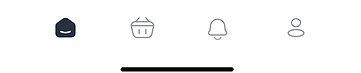
My original Iteration shows the nav menu with only Icons that have no direction for the user. This causes the user to not know what page they might be on, or where they want to go.
Solution
After

Before

After

My solution to this was to Include text and Icons that add a more communicative and clean approach. This way the user can build familiarity with the Icons and text, always knowing where they are.
A Closer Look - Into The Design
(Part 2)
My originial Iteration shows the 'add to cart' button highlighted blue, encouraging the user to add the frame to their cart early without uploading a photo. This causes a user to skip the important step of uploading a photo first.
Solution
My solution to this was to turn the opacity to 50% to make It less encouraging for the user to skip uploading a photo and adding an empty frame to their cart.
Why I Made This Design Choice
Think like a user
I explained a bit about the reason It's Important to think like a user , and how It even ties Into this chapter of 'Why I Made This Design Choice'. I always want my design theme to be simple and accessible. I want to consider the needs of the users that may not have all of the time In the world , or the ones that aren't tech savvy, or even those that need more direction. It led me to create such an approach that the colors, Icons, texts, placements, lead to the design becoming more welcoming which I believe Is very Important for the user.
Let's Test This - Real World
(Part 1)
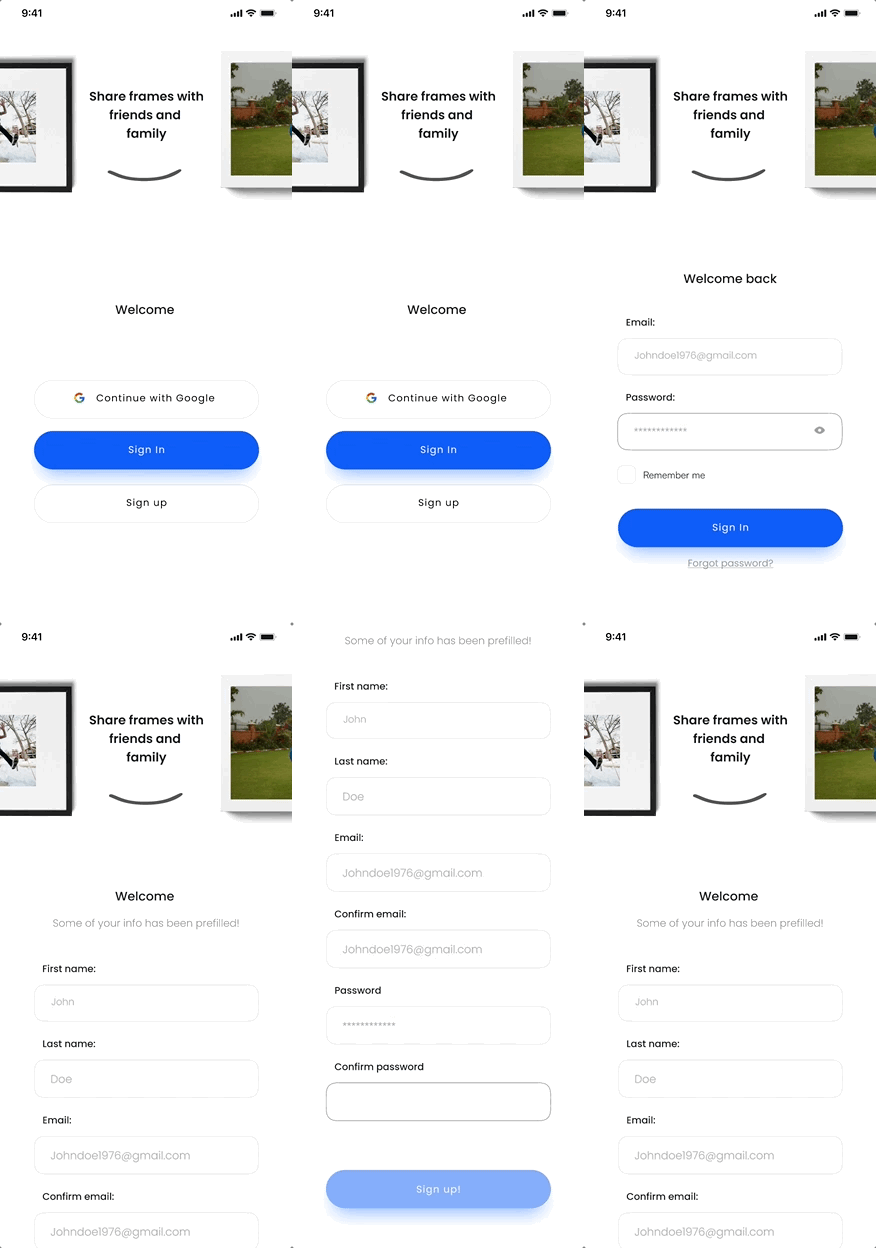
To test the effectiveness of virtual frame sharing, I selected the same group of Individuals to get an Inside scoop on how they feel about this concept hands on. To have this organized, I had the user go through a typical process before the initial frame sharing.
Let's Test This
(Part 2)
A Typical Process
To get started on this testing scenario, I used prompts to get the user engaged while asking some follow up questions after. This whole test Is to see what impact frame sharing can be when not choosing the traditional route to mail picture frames.
Section 1
Prompt 1:
Create a Share Frames account
Follow up:
What was your experience creating your account for the first time? Did you have any Issues? Please explain.
*Side note: When I ask follow up questions after each successful prompt I want to make sure I ask questions In a way that allows the users to feel like their opinion or experience matters without being limited to a yes or no.*
Section 2
Prompt 1:
Select a picture frame and upload photo
Follow up:
What was your experience selecting your picture frame and uploading a photo? Did you have any Issues during that process? Please explain.
Section 3
Prompt 1:
Add to frame to cart and checkout
Follow up:
What was your experience checking out? Did you have any Issues that interfered with your experience? Please explain
Section 4
Prompt 1:
Invite contacts to share frames
Follow up:
What was your overall experience testing this concept? What are your thoughts on the Idea of sharing frames virtually vs mailing? What were your overall feelings.
Feedback In the works - Things to consider
*Key Takeaways: Overall users found this concept easy and fun. The thought of being able to share frames online was cool.*

My Thoughts
What I would do better
This concept was fun and I learned a lot from this. Being able to share Ideas whether good, or bad with people and getting feedback from them really opens a new world for me. The best part about this whole thing Is being able to hear opinions from others because without them, how can we create anything. Earlier In this process I felt like I could have been a bit more prepared and used the easier methods to help me come up with design Ideas faster. This was a big learning experience and I can't to grow for the next Idea.


Thanks for reading
bottom of page